
How to get the most out of our Program
Some necessary tools to guide your family’s commitment and success, starting you on your way to joining the musical community, locally and beyond.
Goals
We want to prepare you to be able to join the local ensembles, like those at UVMC, and eventually audition for All-State and summer programs and camps! To achieve those goals, here is a practice guide we will use to create weekly goals.

Class Schedule
Here is a sample schedule for an ideal pace for completing Suzuki Book 1 and approaching the level required for the first String Orchestra at UVMC
Home-practice
Students should be ready to commit to 15-25 min per day of focused practice.

Class Overview

Preparation
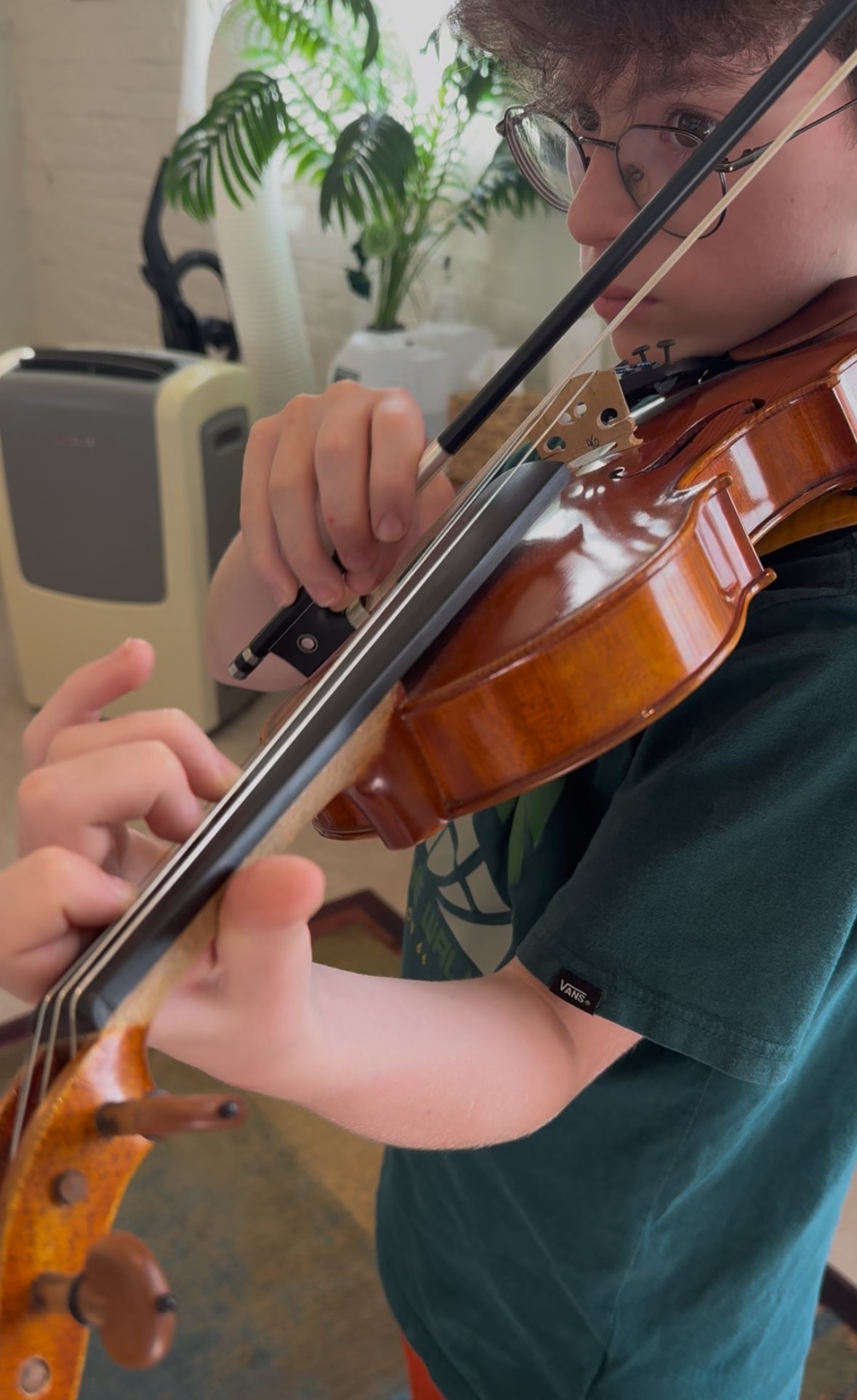
Take care of your violin: keep it away from temperature extremes, (don’t store by a heater, or leave in a cold car) and be gentle with it so that it doesn’t get knocked out of tune. (I will teach you how to tune, in case it does.) Loosen your bow a bit when you put it away. We will go over in class how to put it in the case. You can store it at home in a safe place outside of the case if it makes practicing easier.
A small amount of focused practice is necessary each day, any time that is good for you, and it can be broken into several small sessions. Use of practice materials is also important. Playing with a YouTube video at home, or just a metronome, along with making recordings and listening back to them, are all essential tools.

Class Participation
Come to class every week, (unless you are sick or have an emergency!) You may use a recording device in class to keep notes, take pictures and videos of specific techniques and form to practice, or write things down. Parents are welcome to stay in class. This will help them observe home practicing to ensure the proper technique is being implemented – and this will shorten the time needed to practice.

Performance Opportunities
Students gain valuable experience by regularly playing for the other classmates. Working through mistakes in front of others, in a supportive environment, fosters confidence and helps students become comfortable with performing in general. This is even more useful for kids who might be shy – small doses of performance experience in weekly classes is a great way to help them develop comfort and the ability to handle “nerves.”