
For Current Students
Here are some practice materials and guides. Please let me know what else would be helpful to put up here, and ask for any explanations that you need!
For those in need of a music stand, here’s a decent one I found on Amazon
Step #1: Listen to the first piece, (there are many on Youtube, but here are a couple to get you started..)And for some in-depth explanations of beginner basics, scroll to the bottom of the page for resources I found from other teachers online.
You should be able to find a professional audio recording on itunes, or other music apps, (the official Suzuki recordings of the Book 1 pieces), or you can find many people playing it on youtube, like this guy:
Shoulder rest info:
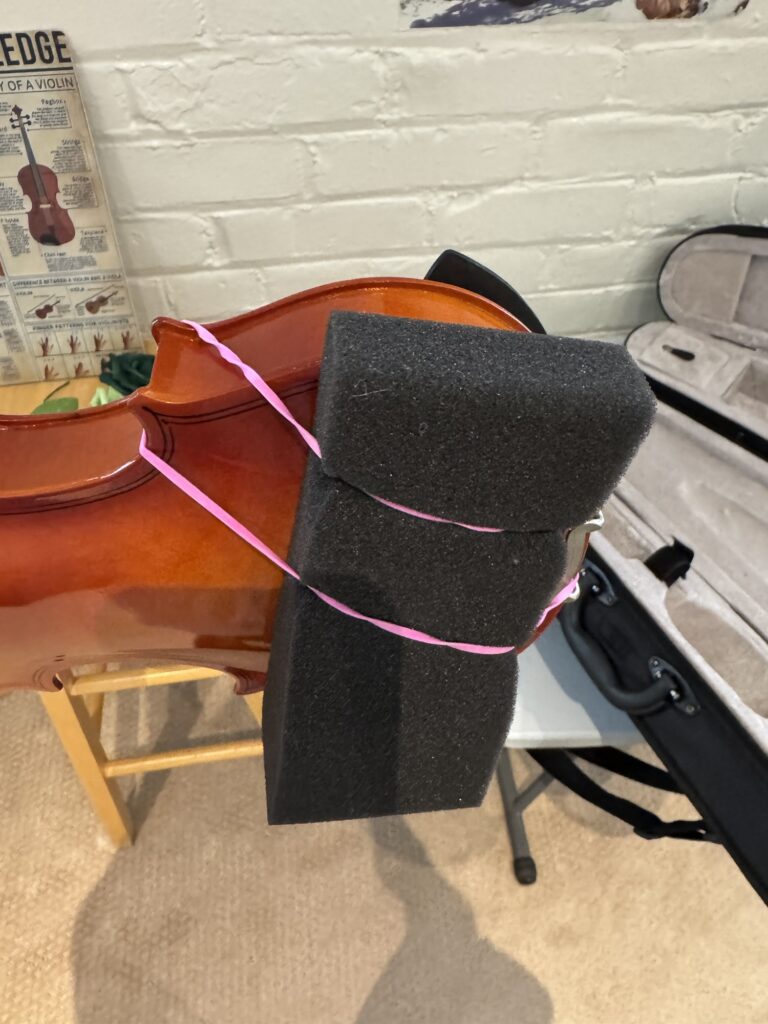
See Amazon links below for shoulder rests (or just use 1-2 kitchen sponges with a rubber band for now!) This photo is of an extra long sponge that gets thicker on the end opposite the chin rest. This one works for some kids: you could make a custom one that works for you by gluing sponges together!
Next Steps
Checklist #1: First week or two of practice – check the boxes for demo videos!
Checklist #2: Beginners Skills List
Checklist #3: Big Picture Practice Form (to get you thinking!)
Improvise your own piece
Using everything you have learned so far. Even just open strings, pizzicato, or bowing on the bridge can be part of your piece. You can also sing while you play, (my kids liked to do this, and it is a great way to develop a natural relationship with playing the violin.)
Use a phone or another recording device, and record your improvisation. You can start with 30 seconds and then increase the amount of time. If you’re having trouble getting your child to practice in the beginning, starting with just five minutes a day is fine! I recommend keeping the violin out of its case and ready to play and finding a routine time to pick it up, like just before reading a book before bed. Or another good time is right before some kind of treat or reward like a dessert or screen time.
Encouragement for practicing
Parents, if you need other ideas to help get your kids practicing, try weekly charts with boxes they can check off, along with some type of long-term reward system. I also encourage parents to ask their children to help teach either a sibling or the parent what they’ve learned so far. Be sure to make it fun and silly and try to get them to laugh in the process! Some kids enjoy making a pretend YouTube instructional video, to explain what they’ve just started learning, and show their process to an imaginary other.